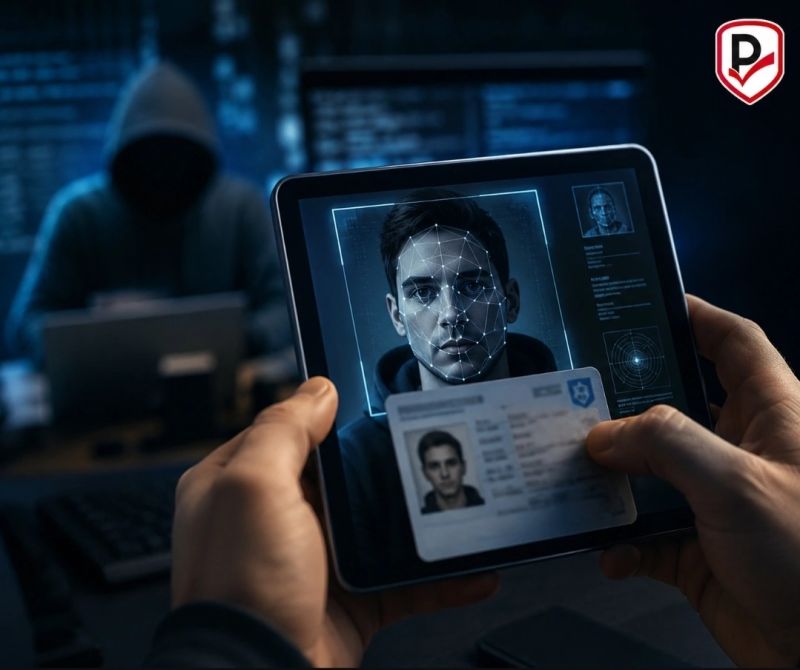
This past week, a particularly troubling case came to light in Israel that shows how the world of fraud is being transformed by artificial intelligence.
According to the suspicions, a 20-year-old managed to create “synthetic identities” of Israeli citizens using photos and personal details obtained from breached databases. With AI tools he animated the photos, produced videos that looked entirely authentic, and used them to open bank accounts, order credit cards and carry out financial transactions in the names of people who had no idea it was happening.
According to the investigation, many dozens of victims have already been identified, and it is suspected that hundreds of citizens were harmed by this activity.
What troubles me most about this case is not only the scale of the fraud, but the proof that the identification methods we have relied on for years are no longer sufficient on their own.
A photo of an ID card, a selfie, a short video, remote verification — until recently all of these were considered strong layers of protection. Today, in the right hands and with advanced AI tools, they can be faked to a level that makes it very hard for the human eye to detect the deception.
This challenge no longer belongs only to banks. It is relevant to any organization that hires employees remotely, approves suppliers, opens customer accounts, grants access permissions or runs digital identification processes.
The question is no longer whether an identity can be faked, but whether your control system is able to detect the forgery in real time.
In recent years I have seen more and more cases in which the line between a real person and a figure created by AI is becoming blurred. Organizations must adapt their verification mechanisms to the new reality, and not rely solely on methods built for a world that existed before artificial intelligence.
Alongside the threat, there are now advanced solutions that make it possible to spot signs of AI forgeries, detect anomalies in the identification process and verify identities in real time.
We have advanced technological solutions to address these challenges in real time. Feel free to reach out to me for details.