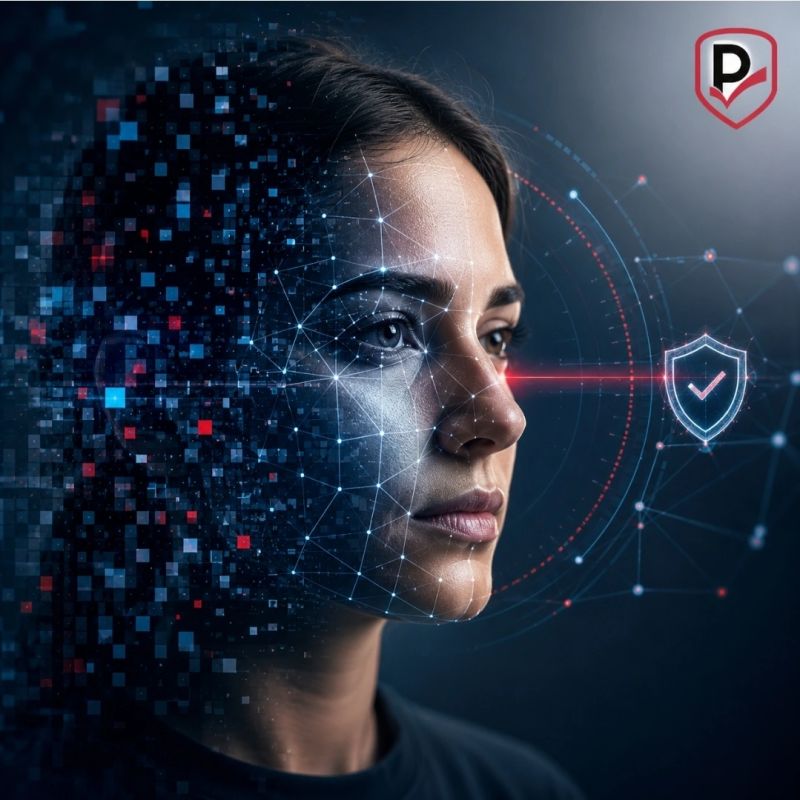
This is no longer a philosophical question. It's a business question, a security question and a management question.
The article in Science by Prof. Hany Farid, one of the world's leading experts on detecting digital manipulation, lays out a reality we all have to internalize: a deepfake no longer looks like a technological toy. It looks real, sounds real, spreads fast, and shapes the way people make decisions.
And the big problem isn't just that the fakes are getting better. The bigger problem is that trust is being eroded.
When a manager receives a video. When the HR department runs an online interview. When a company gets approached by an investor, a candidate, a vendor or a business partner. When an incriminating video starts circulating online. When a familiar voice asks for urgent action.
The first question can no longer be: "Does this look real?" Because today, plenty of fake things look completely real.
The right question is: "How do we check this professionally before we act?"
What I especially liked in the article is Farid's investigative approach. He doesn't settle for an automated tool that says "90% fake" or "70% real." He examines physics, motion, shadows, reflections, angles, lip-sync to voice, consistency between frames, and the broader context.
And that's exactly the point. With deepfakes there is no single magic solution. You need a combination of technology, investigative experience, an understanding of human behavior, an understanding of the digital arena, and the ability to ask the right questions.
In the business world this is especially critical. Because deepfakes don't threaten only politicians or celebrities. They threaten hiring processes, background checks, trust between organizations, fraud protection, digital identity, and the ability to understand who is really standing in front of us.
An online job interview can be faked. A professional profile can be well built yet not genuine. A manager's voice can be cloned. A video can be edited. An image can be generated from scratch. A document can look authentic while being part of a broad deception scheme.
That's why organizations can't stay at the stage of "it looks real to me." They need a verification capability. Not out of panic. Not out of excessive suspicion. But out of responsibility.
Anyone who recruits employees for sensitive roles, vets business partners, verifies identities, handles fraud incidents or deals with suspicious content online must add to their desk the ability to deal with deepfakes too. Especially when everything happens online.
If you're dealing with a suspected deepfake, a fake identity, a suspicious interview, problematic digital content or an incident where it's unclear what's real and what's not, you're welcome to reach out to us.
We have innovative, groundbreaking solutions for dealing with deepfakes, including in online environments, combining advanced technology with professional human analysis.