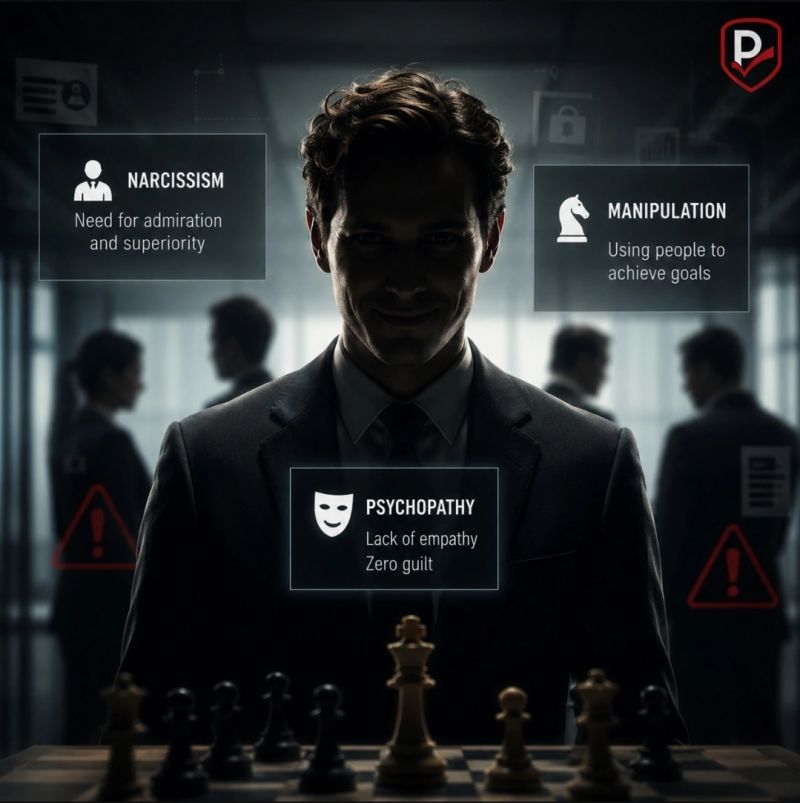
One of the most troubling topics in the world of personality assessment is 'the Dark Triad'.
These are three personality traits that may initially look like self-confidence, charisma, or assertiveness, but within an organization they can turn into a real internal threat: narcissism, which involves a need for admiration, a sense of superiority, and difficulty accepting criticism; manipulativeness (Machiavellianism), which means using people as tools to achieve goals, without much guilt along the way; and functional psychopathy, which involves extreme coolness, a lack of empathy, and the ability to carry out harmful actions without conscience.
The interesting part is that people with such traits don't always fail job interviews. On the contrary.
More than once they are very impressive. They know how to talk. They know how to sell themselves. They know how to identify other people's weaknesses. And they know exactly which persona the organization wants to see in front of them.
That's why I think one of the biggest challenges today in the world of insider threats is not only identifying a 'problematic past', but understanding patterns of personality and behavior that may turn into an organizational risk in the future.
This can manifest as leaking information, deliberately harming the organization, manipulating employees, creating a toxic culture, or simply making dangerous decisions without any empathy for the consequences.
It's clear that not every person with Dark Triad traits is a criminal or an insider threat. But when you combine access to sensitive information, pressure, ego, lack of oversight, and manipulative ability, you get a combination that managers must be aware of.
And this is exactly where the value of in-depth assessment, proper questioning, intelligence from open information sources, and identifying red flags before harm occurs comes into play.
Because in the end, the most dangerous threat in an organization is usually not the one who looks dangerous. It's the one who knows how to look perfect.