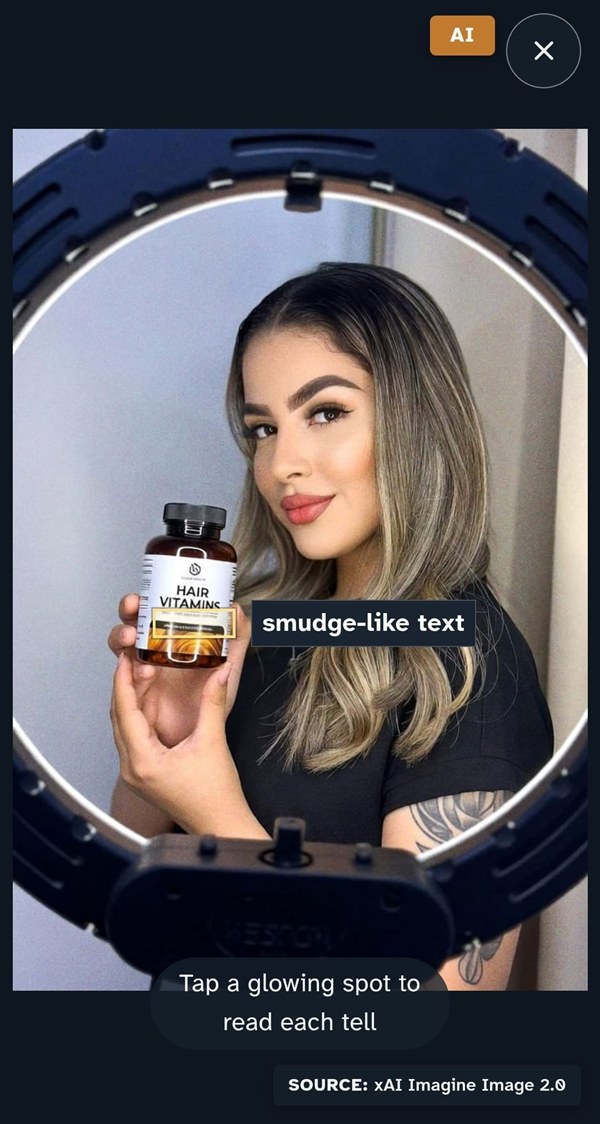
I found a small game called Slopcheck that is worth a few minutes. The idea is simple: every day it shows six images, and we have to decide whether each one is a real photo or an image generated with AI. After every answer the game explains which details in the image could have given it away.
Sounds easy? I suggest trying it before you answer.
But for me, this game is interesting for a completely different reason. It illustrates a problem we run into today in background checks and OSINT: we still put too much trust in what we see.
A professional photo on LinkedIn. An Instagram account that looks active. A photo of someone at a conference. A profile that looks long established. Photos with friends, family or colleagues.
Once, a set of signals like that gave us the feeling that a real person stood behind the profile. Today that is no longer enough.
You can generate a face that never existed. You can create images of the same person in different settings. You can build a visual history that looks convincing. And you can wrap a fake identity in a professional profile that looks, at first glance at least, completely credible.
And that is exactly the trap.
Sometimes we go looking for the AI tell: an extra finger. Garbled text in the background. A shadow that does not line up. Odd glasses. Anatomy that makes no sense.
These tells matter, and the game is excellent for training the eye. But professionally, I do not think this is the right way to handle the problem. Because as the models improve, the visual tells we learned to spot disappear.
So in a background check the question should not only be: was this image generated with AI?
The more important question is: does the identity behind the image hold up against reality?
And at that point you have to move from a single image to checking the whole picture.
Does the professional history add up? Are there independent indications tying the person to the organizations they claim to have worked for? Is their timeline plausible? Does the activity across different networks match? Do real professional connections indirectly confirm the story? Do photos, mentions, documents and separate profiles form one consistent identity, or do they contradict each other?
That is the difference between looking at a photo and verifying an identity.
In the age of AI, human intuition still matters a great deal. But it should be the starting point of an investigation, not the verification mechanism itself.
And that may be the most important lesson from Slopcheck: if we get an image wrong in the game, we lose a point. If an organization gets the person behind a profile wrong, the price can be something else entirely.
It is worth trying the game and seeing how good you really are at this.