In recent years I've been hearing more and more defense organizations talk about their desire to work with small, innovative and agile companies. Everyone wants innovation. Everyone wants creative solutions. But in reality, quite a few companies never even make it to the starting line.
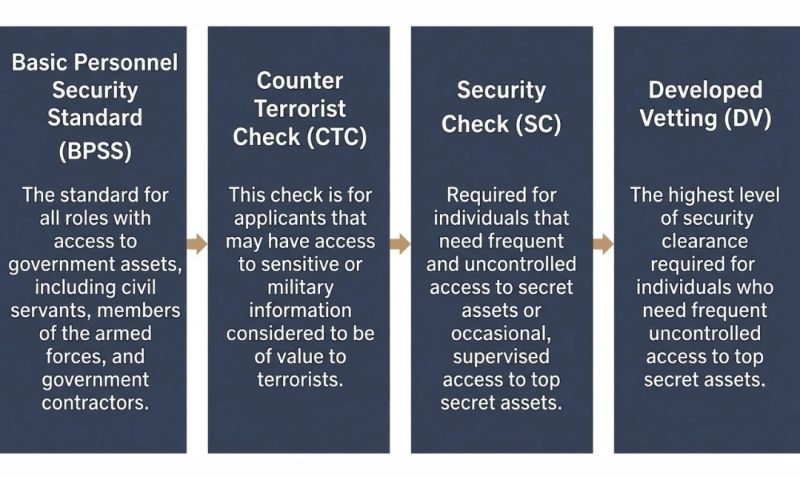
An interesting article published recently in the UK exposed one of the biggest challenges in the defense world: the security clearance process itself.
On the one hand, there's no debate about the importance of background checks, security clearances and protecting sensitive information. These are essential mechanisms designed to safeguard national interests, sensitive technologies and critical supply chains.
On the other hand, when the process of obtaining a clearance drags on for many months and sometimes more than a year, an absurd situation arises: the company can't get a contract because it has no clearance, but it also can't get a clearance because it has no contract.
This dilemma isn't unique to the UK. Anywhere that complex screening processes and trustworthiness vetting exist, the challenge is finding the balance between security and agility.
As someone who has worked for many years in the field of background checks and trustworthiness vetting, I believe the goal is not to lower the requirements. On the contrary.
The goal is to create smarter, faster and risk-management-based processes.
Not every supplier represents the same risk. Not every employee needs the same level of vetting. And not every process has to drag on for many months.
When risks are managed properly, you can both maintain security and enable innovation and growth.
The real challenge isn't to perform more checks. The challenge is to perform the right checks, at the right time, and in a way that lets the organization move forward instead of getting stuck.